
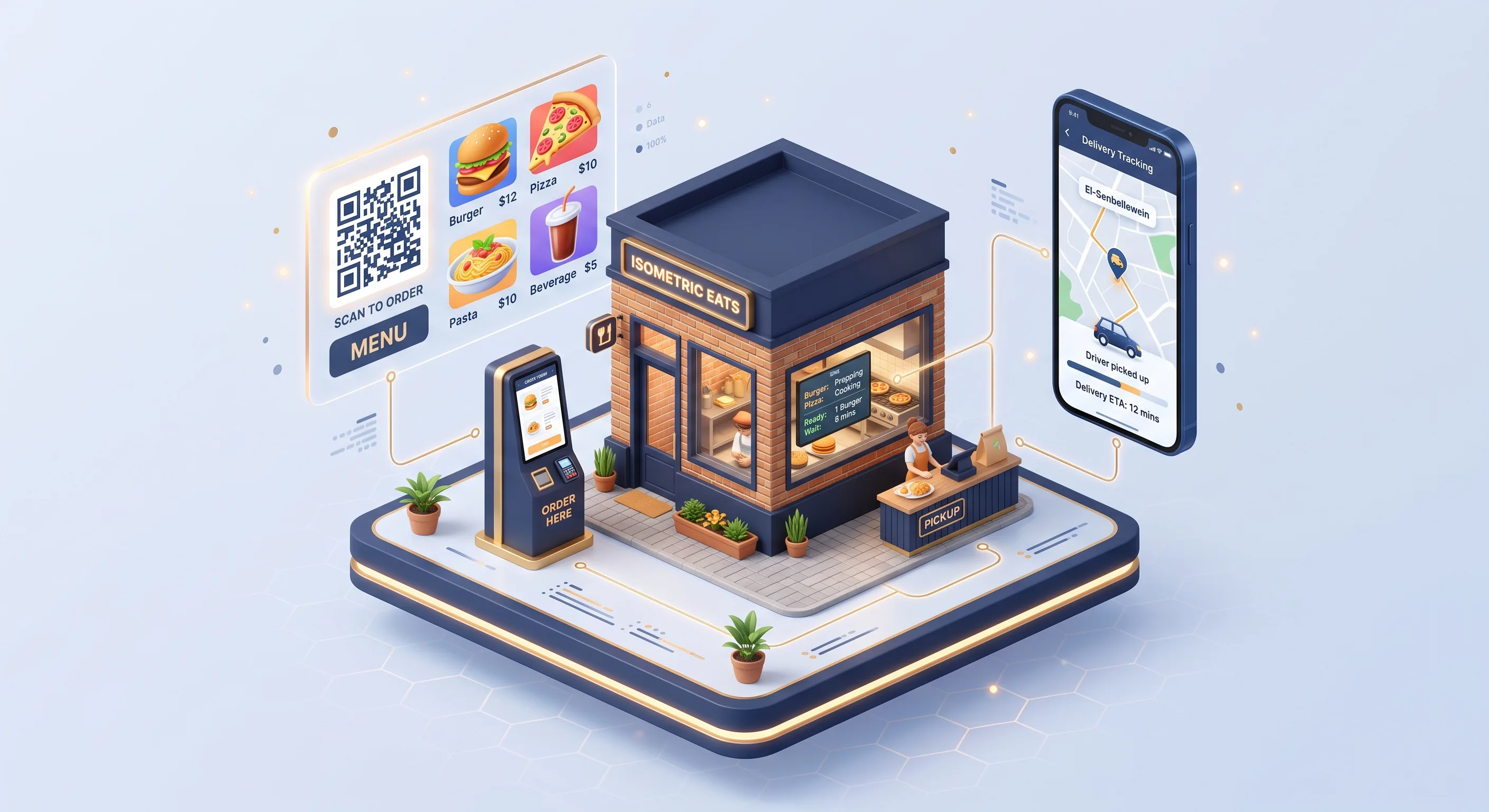
The Food & Beverage (F&B) industry is experiencing a profound technological transformation in 2026. Sustainable profitability no longer relies solely on culinary excellence, but on the operational cohesion of a unified Restaurant Tech Stack. Integrating cloud Point-of-Sale (POS), interactive QR menus, Kitchen Display Systems (KDS), automated recipe costing, and direct ordering apps meaningfully cuts labor expenses while eliminating third-party delivery commissions.
6 Core Pillars of the Modern Restaurant Technology Stack
| Technology Layer | Primary Operational Capability | Direct Bottom-Line Impact |
|---|---|---|
| Cloud Point of Sale (POS) | Table order entry, ZATCA e-invoicing compliance, Mada/card terminal sync | Accelerates table turnover speed and eliminates cash register reconciliation errors |
| Dynamic QR Code Table Ordering | Dine-in menu browsing, visual modifiers, and direct 1-click Apple Pay checkouts | Increases average guest check via high-fidelity visual cross-selling |
| Kitchen Display System (KDS) | Replaces thermal paper chits with prioritized digital cook stations and prep timers | Slashes ticket preparation times and eliminates lost orders during rush hours |
| Direct Ordering & Delivery App | Branded web portal and mobile app for direct pickup and home delivery | Saves a meaningful share of third-party aggregator marketplace commissions |
| Live Inventory & Recipe Costing | Automated real-time depletion of raw ingredients with every POS transaction | Prevents kitchen waste, identifies raw material theft, and pinpoints exact plate food cost |
| Loyalty CRM & Automated WhatsApp | Captures guest phone numbers and dispatches personalized automated points and offers | Dramatically multiplies 30-day customer repeat visit retention |
Eliminating Fragmented Data Silos in Restaurant Tech
Snaabble provides a tailored technical assessment to define the right stack & exact budget.
The primary pitfall in restaurant operations is running disconnected vendor software—one vendor for POS, another for QR menus, and a third for delivery. This creates reporting chaos and operational gridlock. The modern standard is a unified, API-driven architecture. Review our real-world implementation in the FoodFlow Restaurant Platform Case Study.
Building custom cloud POS systems, interactive dine-in QR ordering platforms, and direct-to-consumer delivery applications for restaurants is part of Snaabble's custom systems and mobile app services.
Frequently Asked Questions
Does the restaurant POS system function during internet outages (Offline Mode)?
Yes. Modern POS architectures operate on an Offline-First local database sync, continuing to process table orders and kitchen tickets until network connectivity resumes.
How do direct ordering platforms boost restaurant profitability?
By eliminating third-party aggregator fees and providing direct ownership of customer data to drive repeat visits via automated WhatsApp loyalty marketing.