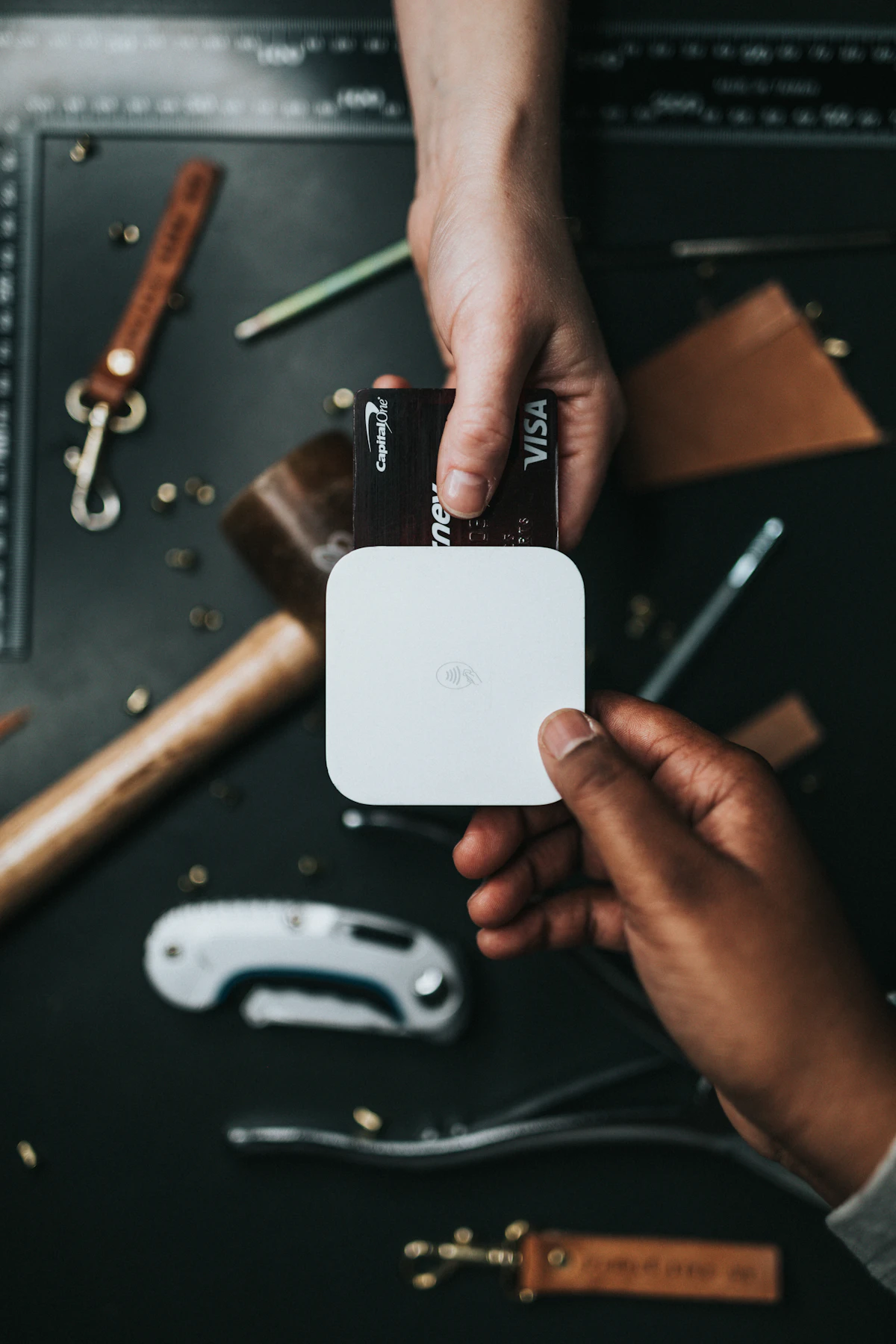
The simplest way for an online store in Egypt to accept payments is to connect a payment aggregator such as Paymob or FawryPay: one integration gives you bank cards, mobile wallets, instalments and cash payment at collection outlets. Choose the provider based on the methods your customers use, officially published fees, settlement time, integration options and how much PCI DSS responsibility you take on.
What payment options does an online store in Egypt have?
In practice there are four options: an aggregator such as Paymob or FawryPay that bundles many methods into one integration, InstaPay instant bank transfers, cash on delivery, or a mix of these. The table summarises what each official page states (checked 13 September 2026):
| Option | What it is | Payment methods listed officially | Integration | Published fees |
|---|---|---|---|---|
| Paymob | Payment aggregator | Credit and debit cards; Vodafone, Orange, Etisalat, CashPlus and Qahera wallets; Apple Pay and Google Pay; instalments; kiosk payments via Aman and Masary; cash on delivery (Paymob) | Plugins for Magento, Shopify, Ecwid, WooCommerce, OpenCart, CS-Cart and Wix; payment links; API | Standard plan: 2.75% + EGP 3 per transaction, no monthly fee, weekly settlement (Paymob pricing) |
| FawryPay | Payment aggregator | Reference-number payments across Fawry's retail network, banking channels, cards, mobile wallets, and instalments via ValU, Forsa and Souhoola (FawryPay developer docs) | Express Checkout (button or redirect link), REST APIs, mobile SDK, plugins for WooCommerce, Shopify and Magento 2, Pay by Link | No public official price list found; ask Fawry for a written quote |
| InstaPay | Instant bank transfer app | Transfers by Instant Payment Address (IPA), mobile number, account or card; collect requests | No store integration described on its official page | Check the app and your bank |
| Cash on delivery | Cash collected on delivery | Cash to the courier or your own driver | Managed in your store admin and with the courier | Set by your courier contract |
A note on InstaPay: its official Q&A describes an app licensed by the Central Bank of Egypt to operate on the Instant Payment Network, supporting transfers by IPA, mobile number, account or card, as well as collect requests and bill payments (InstaPay Q&A). It doesn't describe any store integration, so if you accept InstaPay, plan to check each transfer manually before preparing the order, unless your payment provider offers a connected option.
How do you choose the right payment gateway for your store?
Start with your customers, not the provider's brand: a payment method a shopper can't find at checkout is an order that never completes. Then compare total fees, settlement time and integration effort. Use this checklist when you compare two offers:
- Payment methods. Look at past orders and ask customers how they prefer to pay: card, wallet, instalments or cash on delivery.
- Total fees. The percentage and fixed fee for each method, refund fees, and whether VAT is included. Take these from the official pricing page or the contract.
- Settlement. When money reaches your bank account, and whether that changes by plan.
- Integration. A ready plugin for your platform, an API for a custom store or an SDK for a mobile app, plus a test environment before launch.
- Checkout type. A page hosted by the provider or a form embedded in your store. This decides much of your PCI DSS responsibility, as explained below.
- Refunds and reporting. Can you refund from the dashboard and export a report that reconciles with your orders?
- Selling outside Egypt. If you have customers in the Gulf or elsewhere, ask about international cards and the settlement currency.
If you are still setting up the store itself, read our step-by-step guide to building an online store before you choose a provider.
How much do payment gateways charge in Egypt?
Fees depend on the provider, the plan and the payment method, and not every provider publishes them. Of the official pages we checked on 13 September 2026, Paymob lists a Standard plan for startups and SMEs at 2.75% + EGP 3 per transaction, with no monthly or subscription fee and weekly settlement to your bank account (Paymob pricing).
A worked example with those figures: on an EGP 500 order you would pay EGP 13.75 (2.75%) + EGP 3 = EGP 16.75. Before you rely on it, ask whether the rate differs for instalments or wallets and whether it includes VAT, because the page doesn't break that down. We found no public price list for FawryPay, so request a written quote and compare it the same way.
What is PCI DSS, and what does it mean for your store?
PCI DSS is a baseline set of technical and operational requirements for protecting payment account data, and it applies to every entity that stores, processes or transmits cardholder data. The PCI Security Standards Council doesn't enforce it directly; the card brands run their own compliance programmes, so merchants should ask their acquiring bank or payment provider what applies to them (PCI SSC merchant resources).
Your workload depends mainly on how card data reaches the provider, and it is validated with a Self-Assessment Questionnaire (SAQ). The bank or provider you report to confirms which SAQ you complete, as the Council advised when it published the PCI DSS v4.0.1 SAQs on 15 October 2024 (PCI SSC bulletin).
Snaabble provides a tailored technical assessment to define the right stack & exact budget.
| How customers pay in your store | Likely SAQ | What stays with you |
|---|---|---|
| Redirected to a checkout page hosted by the provider, or sent a payment link | SAQ A | Securing the store and admin panel, and making sure the redirect goes to the genuine provider page |
| A payment form from the provider embedded in your page (iframe) | SAQ A, with an extra condition | Confirming your page isn't susceptible to script attacks, either by applying the techniques in requirements 6.4.3 and 11.6.1 or by getting confirmation from your PCI DSS compliant provider that its solution includes that protection when implemented as instructed (PCI SSC clarification, 28 February 2025) |
| Your own page collects the card fields and sends them to the provider with your JavaScript | SAQ A-EP | More responsibility for the payment page and the server that delivers it |
| Card numbers received or stored on your servers | SAQ D | Full compliance scope; not sensible for a small store |
Paymob states that its online gateway is fully PCI DSS certified. That covers the provider's environment; it doesn't remove your responsibility for your own store and the pages customers pass through.
How do you secure payments in your store day to day?
The most important security decision is keeping card data off your server. After that, a few implementation habits prevent order-status tampering and data theft from the page:
- Never store card numbers or CVV codes. Use the provider's hosted page or embedded form, and keep only the reference or token it returns.
- Confirm orders from the server notification. Mark an order as paid only after you receive the provider's callback or webhook and verify its signature as the provider documents, not from the browser return URL, which a customer can edit.
- Turn on 3-D Secure. According to EMVCo, it lets the merchant and the card issuer exchange data to authenticate the buyer: low-risk purchases go through with no extra step, while higher-risk ones get a challenge such as a one-time passcode or biometrics (EMVCo).
- Control scripts on payment pages. Keep third-party scripts to a minimum, apply a Content-Security-Policy and monitor for script changes. That is the intent of requirements 6.4.3 and 11.6.1.
- Protect customer and admin accounts. Limit login attempts, use two-step verification for admin accounts, and keep plugins and servers updated. Common weaknesses and fixes are covered in our web security vulnerabilities guide.
- Review unusual orders before shipping. For example, several failed payment attempts followed by success on a different card, or a large order from a brand-new account.
Why do payments fail, and how can you reduce failures?
Many failures are within your control rather than the bank's: an unclear message, a slow page or a missing payment method. Fix these first:
- A clear decline message that tells the customer what to do next (insufficient balance, wrong code, try another method) instead of "Payment failed".
- A lightweight mobile checkout, so the one-time passcode doesn't expire while the page loads.
- Keeping the basket and address after a failed attempt.
- A fallback: another payment method, or a payment link sent later on WhatsApp, as described in our WhatsApp chatbot guide for stores.
- Checking the declined-transaction rate in the provider dashboard every day, so integration problems surface early.
Frequently asked questions
Which payment gateway suits a small store in Egypt?
There is no single answer. If your store runs on WooCommerce or Shopify, start with a provider that has a plugin for your platform, such as Paymob or FawryPay, compare the methods each supports with what your customers use, then compare the fees written into each offer. If you need cash payment at Fawry outlets by reference number, FawryPay's documentation lists it explicitly.
Can I accept InstaPay in my store?
You can display your company account's Instant Payment Address (IPA) and ask for proof of transfer, but that is a manual flow you must check before preparing each order. InstaPay's official page describes transfers and collect requests, not automatic store integration, so ask your payment provider whether it offers one.
Does my store need PCI DSS certification?
Any business handling card data falls under PCI DSS, but a store that uses a hosted checkout page or an embedded form from a compliant provider usually qualifies for SAQ A, which is far lighter than a full audit. Your bank or payment provider decides what it requires from you.
Do I need a developer to connect a payment gateway?
On hosted platforms, installing and configuring the provider's plugin is often enough. A custom store or mobile app needs a developer to integrate the API, verify payment notifications, and test failures and refunds in the sandbox before launch.
How can I reduce cash-on-delivery risk?
Confirm each order with the customer before shipping by message or call, offer a discount or cheaper shipping for prepaid orders if your margins allow, and review large orders from new accounts before preparing them.
To connect a payment gateway to a custom store or app, see our e-commerce development service. You can reach us on WhatsApp or by phone at +20 103 673 3131, or by email at hello@snaabble.com. Our office is in Talkha, next to Mansoura.